 |
 |

| Dr. Phil Millard |
| Captain 2/26 Battalion D Force (Thailand) |
Philip Thornton Millard was born at the Coast Hospital (now Prince Henry) south of Maroubra, in New South Wales on 22 June 1909. Initially he was educated at home, then at Coogee Prep School. He went to Long Bay public school and the Sydney Boys High School. He attended Sydney University Medical School and graduated in 1933.
Following graduation he worked at several Sydney Hospitals and in 1937 he traveled to England and whilst there he gained his Surgical Fellowship (FRCS) from Edinburgh University. It was at Edinburgh that he met Joan………a nurse who was to become his wife in 1939. With the outbreak of War they returned to Australia.
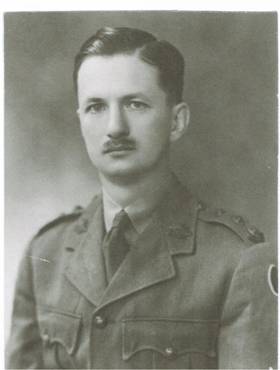 He worked at Orange where their first child was born. He enlisted in the Australian Imperial Forces (AIF) on 25 August 1941 and was commissioned into the Australian Army Medical Corps (AAMC) as a Captain. He was a little older than many of the other Captain Medical Officers and, in view of his qualifications; it is surprising that he was not enlisted with the rank of Major. He was posted as a reinforcement officer for the 2/10 Field Ambulance and traveled to Singapore on the Aquitania arriving there on 24 January 1942. Just three weeks later he, along with thousands of others, became a Prisoner of War. Whilst the above says that Millard was posted to 2/10 Field Ambulance, it seems that on the death of the Regimental Medical Officer (RMO) of 2/26 Battalion Captain Kenneth CM Madden QX6478 on 9 February 1942, he was posted/sent (in the chaos) to that unit. The circumstances of Captain Madden’s death can be read at the end of this article.
To get a picture of Captain Millard’s activities whilst a member of the AIF, and as a Prisoner of War, it has been necessary to access a number of books and consult members of his family..
- Lieutenant Gerard H Veitch in his book “War Diary and Recollections” (self published) has 6 references to Millard. They are short comments and refer to the first 15 months in Singapore as POWs including Millard’s selection to go to Thailand as a part of “D” Force and his departure from Singapore on 18 March 1943. There is also one reference by Veitch who as a member of “F” Force, when marching nearly 300km to their work stations near the border of Burma, having contact with Millard on 1 May 1943 in the vicinity of Tonchan South.
- Captain Roy Mills in his book “Doctor’s Diary and Memoirs” (self published) ISBN 0 646 19473 9 has 4 references to Millard. The most significant concerning the early deterioration in POWs eyesight during 1942 whilst they were still in Singapore. The extract follows:-
“Soon there was a new worrying complaint – men started to complain of failing eyesight. At first we did not know if this was a manifestation of Vitamin A deficiency or of the Vitamin B Complex. Captain PhiI Millard and I sorted this out in the small pantry-like room where I had my microscope. This room had white tiles on one wall and we got the patient to stare into a bright electric light globe for so many seconds, then we would measure the time it took for the patient to be able to see markings on a tile. We found that these patients did not take longer than others, so we concluded that it was not a deficiency of Vitamin A that caused the problem but a deficiency in Vitamin B Complex. I recalled that Vitamin A and its precursors like carotene went into the production of Visual Purple in the retina. Visual Purple was necessary for good night vision. When the retina was exposed to a strong light the Visual Purple blanched and then reformed when the strong light was removed. Impaired vision due to deficiency of the Vitamin B Complex was an indication for evacuation to Changi if it could be arranged for there was a reserve supply of marmite at Changi. The transfer to Changi was never easily arranged even for patients requiring urgent surgery.
…
Later in Sime Road Camp Phil Millard and Roy Mills took music lessons from Flight Lieutenant Don Dowie of the RAAF (Don Dowie post war studied and became a doctor). He was probably the first Australian POW of the Japanese. See his story elsewhere on my website.”
- The following comments were prepared by Mick Wedge an officer of 2/4 Machine Gun Battalion in 2003 (Mick Wedge died around 2007).
“Throughout those dreadful days in 1943, on the Burma Railway, I was posted to KANU No. 2 Camp with one hundred and forty 2/4th Machine Gunners. The officer in charge of his camp was Major Schneider 2/10th Field Artillery. Other officers that were also there were Captain Bill Gaden 2/19th Battalion, Lieutenant Ken Schultz 2/10th Field Artillery and Captain Phil Millard, Medical Officer. A total of five officers and five hundred and eighty men.
The camp didn’t exist, we had to hack it out of the jungle and erect tents that were full of holes. When the rains came, the camp became a complete quagmire. Phil Millard was concerned with the increase in the number of the sick men, both with Malaria and Dysentery, and wondered if a hut could be built to keep these sick men off the ground. It was typical of Phil, he worked harder than anybody cutting bamboo and lashing it all together and putting on a roof of palm fronds. He had very little treatment for anything. The men came to idolize him as he would always sit and talk to them. I slept next to Phil in our tent. At 2 and 3am, most nights, he would get up and I used to ask him “what was the matter?” He would reply “I have two or three men in the sick hut and they won’t live much longer so the least I can do is to sit with them and let them know that somebody cares”.
The Cholera hit our camp at the end of May, 1943. Phil felt that a compound of two tents should be erected about 1 kilometre from the main camp to isolate Cholera patients. We soon had our first patients. Phil was so concerned because he had no treatment for them. He got permission from the Japanese Guard Commander of our camp to visit the main KANU camp to see if he could obtain some tubing and bottles for drip treatment for Cholera patients. He saw Colonel Dunlop but unfortunately he came back empty handed. Over the following two months, we lost twelve men to Cholera. Phil spent hours in the sickness hut and the Cholera Compound. One of my men was one of the worst cases with Cholera, Jim Gilmour, but he survived and only died recently at the age of eighty one. Jim always said he owed his life to Phil Millard. Phil was a tower of strength to all of those men who survived those dreadful five months in KANU 2 Camp.
After the War, Phil and I kept in touch with each other. He became a senior Surgeon at a large Public Hospital in Sydney.
At all of our reunions since the War, the Machine Gunners always asked had I heard from Phil Millard and to convey their best wishes to him.
Phil and his wife, Joan, came over to the West in early 1970. As I worked at Hollywood Hospital from 1945, until 1979, I had employed fifty one Machine Gunners at the Hospital. I asked Phil to come over to the Hospital and see some of the old faces. I could not move in my office after he arrived, they were so pleased to see him.
Phil Millard died in November, 2001. The following Death notice was placed in the West Australian Newspaper.
MILLARD. Dr. Phil.
Always remembered by the
2/4th Machine Gun boys
from KANU No. 2 Camp
on the Burma Railway, 1943.
Deepest sympathy to Joan
And Family.
- There are 4 references to Millard in the book “Medical Soldiers – 2/10 Australian Field Ambulance 8 Div 1940-45” self published by Ray Connolly and Bob Wilson. The following is an extract from that book and the comments are by Private Clyde Ramsay NX33217 2/10 Field Ambulance:-
“It was here that we first ran into cholera, and I’ll never forget because Dr. Millard asked me if I’d go out and look after the cholera cases, which I did, and I spent many lonely nights out in the jungle all by myself with only the sick and dying men, many of them only lasting two or three hours after being brought out there on stretchers. When the work finished there, we went down to River Conu. Now we had to carry the sick with us, carry all our own gear and their gear. It is here that I gained the greatest respect for Maj. Schneider, Lt. Schwartz and Dr. Millard. I got on one end of the stretcher with Maj. Schneider, Doc Millard and Schwartz on the other end, and we took the biggest man, his gear and all our gear on the stretcher and we started out with him. Well, I can remember it was just absolutely pouring rain all the way. We put the stretcher down for a couple of rests, but it got so bad near the finish that Doc Millard used to keep saying “Let’s get him there, let’s get him there”. That’s all he could think of, getting this poor chap into camp out of the rain. He died a couple of days later, but we tried.
It was River Conu that I got cholera and Doc Millard saved my life – there’s no way in the world that he didn’t. I’m not going to go into that. I was carried by stretcher to Hintok, where we were put into a cholera compound and that’s as far up the line as I went. I was put on a barge to go back to Tarso, and when I arrived at Tarso I weighed just over 7 stone and had to have two sticks to walk around with, but Doc Millard came down the line, maybe a month to six weeks after I did, and he took me under his wing and looked after me, and I gradually built up. And here I met with Staff Sgt. Smith (he was in a dental unit with old Jim Finnimore) and they were very good to me also.
Now Snow Naveau was cooking for the Officers there at Tarso, the doctors, and unfortunately for Snow they did dysentery tests on everybody and Snow’s showed positive, so he wasn’t allowed to cook any longer, so Doc Millard got me to do the cooking. I had a couple of offsiders. And I think this is the reason why I’m home today, because the doctors bought a little extra for themselves and I was able to partake of the same rations that they were having and I think possibly that helped me come right.”
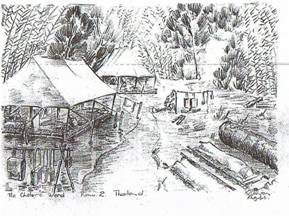
Konu Cholera Ward
- The following extract comes from the book “All in my Stride” (the story of John Gilmour POW and champion athlete) by Richard Harris ISBN0 85905 260 5. The extract concerns John Gilmour’s brother Jim .
“Jim(Gilmour) left Changi with the McDonald brothers and another friend, Jim Elliott, in “D” force to work on the Thailand end of the Burma railway at Konyu Camp. He went down with cholera on June 29 1943, the second Australian to suffer this disease. He was working on the railway when it came on with dysentery on the job. He had severe cramps and was discharging fluids from all his body apertures, including his ears and mouth. The men had no experience with cholera and they were massaging him to relieve the cramps. Jim was the second Australian to report these symptoms that day. He was unconscious for two weeks. All his hair fell out.
Dr. Phil Millard, of Longueville, NSW, saved his life, reviving him by feeding him sips of salt water. Jim celebrated his 22nd birthday in the compound. Jim Basil, a butcher, also from WA, sent him a “get well” present. They had killed a native ox, put aside the brains and cooked them. My brother received a portion on his sick bed and this helped him recover his strength.
The victims of the cholera out break were held in isolation in a special compound in the jungle, where the officer in charge was Lieut Mick Wedge, ………… He was held in isolation for six weeks.
The men were dying on the Burma railway job at Konyu Camp at the rate of 100 per week during the cholera outbreak. …………
Dr. Millard was elated when Jim recovered, and gave him a precious can of Army bully beef as a present to take to Tarso, a big convalescent camp where he stayed for three months before being sent back to work on the railway.”
In the above extract there is mention of Jim Elliott (2/4 Machine Gun Battalion). In September 2008 Jim related to Phil Millard’s daughter Dr Liz Anderson (during a caravan holiday circumnavigating Australia) that he remembered lying in a sick tent in Konyu. Millard was leaning over Jim examining him and said the following words of comfort, “I know what’s wrong with you lad. You’ve got malaria.”
Also in September 2008 Dick Ridgewell (also 2/4 Machine Gun Battalion) said “If Phil Millard were here I would kiss his feet”.
There are 6 references to Millard in the “War Diaries of Weary Dunlop”. The most significant are when Millard was at the big Camp at Tarsao, around May 1943, when Dunlop was visiting from the northern camp Hintok Mountain.
As a consequence of the family providing me with some of Millard’s papers, including treatment notes, I have been able to piece together some of the camps he was in from the completion of the Railway in October 1943 to the end of the War in August 1945.
It is clear that he was in the following Camps (some dates are approximate and others are specific).
- Konyu 1 or 2 1943
- Tarsao Hospital August 43 to March 44
- Conquita and Hindata Jungle Camps August 44 to December 1944
- Petchetburi (White Pagoda) Camp February 45 to 24 September 45
It is worth noting that during his time at Tarsao Hospital Camp he did 12 Amputations (thigh), 1 Amputation below knee, 254 Incision of Abscess, 49 Excision of ulcer (in theatre), 16 Removal of toe or finger, 7Appendicectomies and 4 other procedures concerning the Abdomen.
There is some detail available on two of the procedures which he carried out in the Conquita/Hindata area. One operation was reported in the book “Colour Patch” by Murray Ewen p753. A personal account of that operation follows.
Operation by oil lamp - Capt Philip Millard
A personal account and a most difficult operation - …a perforated gastric ulcer….a jungle operating theatre, very little lighting and a Christmas pantomime
The story is retold from extracts from an exchange of letters after WO Tom Hampton (who had had the acute perforated gastric ulcer) had written to Capt. Phil Millard reminding him of the night time operation that saved Tom’s life.
Capt. Phil Millard …
“Tom Hampton” ? – the name was familiar …. I looked up my list of operations - OF COURSE – the perforated gastric ulcer at Hindato. That was a real drama.
We had an SOS from the camp half a mile away and Ginger Dewardener (RAMC) and I went over to see this ‘acute abdomen’ ….we took over a stretcher and wheeled it on a trolley down the railway line to our camp. Obviously he needed urgent surgery but this was early evening and almost dark. Could we possibly manage?
WO Tom Hampton’s recollection (25…
I can clearly remember that night being carried to the ‘Theatre’ ? – there seemed to be some jungle mist or smoke about and it gave me an eerie feeling..
Phil:
We had had another perforated ulcer two days before …it was very difficult and inaccessible and this man had died … [ Phil had real concerns about proceeding ]
We had some chloroform and ‘Ginger” was a first-class doctor but what could we do for lights?
It was two days before Christmas and we had just had a Christmas pantomime with oil burning inside shiny tins for lighting - and that with the use of a mirror ? …. It was a toss-up!
Tom’s recollection …
I well remember the tins with oil and wicks … also I can recall you coming to see me from a concert, you seemed to be dressed in a striped top …. Something like an old time bathing costume.
I also remember the other doctor but didn’t realise that he played such a vital part in urging you to operate – to me he is the world’s greatest urger !!
Phil:
I had a good assistant in Sgt Ron Field and the moral support of Hugh ‘Ginger’ deWardener who gave the chloroform ….
… we decided we could not leave him till morning. I think the nips may have lent us an electric torch. So it was now or never and we went ahead with the few basic instruments.
Tom…
I can recall the other unfortunate chap that didn’t make it - thinking, after he had died, that I might only have a few hours to go myself
Phil:
Lucky the perforation was right below the incision ….. not as difficult as it might have been …. The rest you know.
Tom…
I stayed a few days at your camp then was taken back to the timber camp
Tom recovered …
The other procedure concerned Private A Liddiard SX 8727 from 2/3 Machine Gun Battalion. These are extracts from Millard’s clinical notes:-
- 3 August 1944. Buried by a fall of gravel about 1130 hrs while building a new cutting on the approach to new railway bridge at Conquita. Found with left leg bent underneath him. When seen near site of accident, in pain, cyanosed, slight bleeding from nose. Complains of pain across lumbar region and left knee. Confused.
- Left knee: Crepitus and abnormal movement immed below joint. Swelling of knee joint.
- Left chest: subcutaneous emphysema .left pectoral region. Crepitation of ribs (3 & 4 left) …….
- Bruising across lumbar region. Mentally disoriented. Amnesia for accident.
- H.I Morphia ¼grain. Thomas Split applied.
- Previous history- June – August 43- Malaria ,Lobar pneumonia ,A-vitaminosis, Stomatitis & oedema May 44 Malaria.
Later Cramer wire from toes to middle thigh. Thomas splint (angled) applied over this. This with light strapping, extension and supported from roof. Great swelling of knee joint.
- 4 August 44. Quite comfortable. Loose cough bringing up bright blood. Urine looks clear
- 5 August 44. Evg temp 38.3
- 6 August 44 Leg comfortable, still loose cough blood stained sputum .. Coarse creps left pectoral region. Pleuro pericardial rub. Suphonamide 1 gm tds .
- 7, 9, 11,12, various notes
- 30 August 44 Rigor at 1 AM Vomited. Now pain in left chest. Headache. 100.2 Quinine 101.6
- 31 August and 1,2, September 44 various notes
- 6 September 44. Temperature normal various notes
- 14 September 44. Splint removed (indecipherable notes)
- 18 September 44 Evacuated to Tamarkan.
A further note was written on these notes in 1981. I recall that I saw Liddiard at Tamarkan 4 months later. He seemed well and was walking without disability and had been working. He appeared to have slight kyphosis in Thoracic spine which makes me think he may have had a crush fracture of a vertebral body.
The Millard papers provided to me seem to have originated from an old Index book (pages M to X (two letters per page)). The book seems to have come from Singapore and was previously used as an A & D (Admission and Discharge) book in River Valley Road Camp.
When the War ended Millard was at Petchetburi (on the route of the railway joining Bangkok and Singapore between Banpong and the Malayan border). He was flown to Singapore. Then on to Sydney by flying boat. He was not formally discharged from the Army until 11 February 1946.
In November 1945 he and Joan and youngster Mike travelled to Wagga. It was here that he entered into a General Practice partnership with an old University colleague Ray Holmes. He left Wagga in 1967 to be staff surgeon at Lidcombe State Hospital.
He was diagnosed with kidney cancer in 1971, but a successful operation left him clear of the disease. He and Joan then moved to Longueville and for many years he assisted orthopaedic surgeons there, doing over 1,000 hip operations. In 1987 the couple moved to the RSL Veterans Retirement Village at Collaroy.
In 1946 Millard prepared a statement regarding conditions in Konyu 2 Camp and about treatment by various Japanese Guards etc. Included in this report is copy of a letter (not found) sent by me to Camp Commander at Konyu main Camp in June ’43. It gives an indication of the conditions prevailing then. (This letter produced no acknowledgement.) Until the Camp was evacuated in mid July conditions grew worse, mainly because the weather worsened and cholera appeared. The cholera was anticipated and provision was made in the form of two tents which leaked badly. They were pitched in the thick jungle a quarter mile from camp. The men lay on the ground or on bamboo slats and it was impossible to keep the men dry or dry their blankets as the rain was incessant. No treatment was available beyond salt and water, and we were not able to get materials or labour to construct a still as was done in other camps to provide distilled water for intravenous saline injections. Many men after recovering from the acute cholera died of uraemia which might have been prevented by intravenous treatment. The mental conditions induced by dirt, depression, and squalor contributed to the death of several men. The I.J.A. authorities were unable to supply more than a very small amount of disinfectant and no proper preventative measures, could be organized. Drinking water was boiled, but utensils and fuel was not available for sterilization of eating gear. On two occasions, several hundreds of coolies were camped for the night within twenty yards of the cookhouse and the sleeping huts and within thirty yards of the jungle stream which was the source of drinking and washing water. These coolies had traveled from the south through other camps where cholera had broken out. Out on the railway our men worked side by side with the native coolies who were responsible for the whole area being thoroughly fouled. Dead coolies were frequently seen between the camp and the job, in the jungle. The universal wetness ensured that mud from the latrines and other contaminated areas was carried into tents and on to blankets. No medical supplies beyond quinine were issued by the Japanese during our stay here and we eked out stores which had been carried up from Tarsao on our march up. The only treatment for most cases of dysentery was charcoal made from burnt rice. The camp was evacuated on 4 July ’43 to lower Konyu where the sick men awaited evacuation. Conditions here were slightly better as purchase of fruit and eggs was possible. Overcrowding was extreme and nursing facilities scanty. Bedpans were made from bamboo, but nursing of cholera patients still presented extreme difficulty. Cholera cases from Konyu 2 and 3 Camps were carried down to this Camp on improvised bamboo litters. The way lay down a precipitous mountain track and two cholera patients died from falling off their stretchers. Evacuation from lower Konyu was by barge to Tarsao (4 to 5 hours) and patients remained here or went on to base camps by goods van (at least 12 hours). The barges were packed very tightly and it was not possible to provide any nursing facilities for dysentery cases en route.
Acts of physical brutalities were not frequent in the camp being chiefly confined to slappings on the face and being stood to attention. I myself was only beaten once by Japanese Private because a party of sick men were not standing properly to attention.
It is appropriate to record an example of the esteem which many of the men from the 2/4 Machine Gun Battalion had for Captain Phil Millard. Soon after repatriation to Australia, they took up a collection and raised the money to present a HMV (His 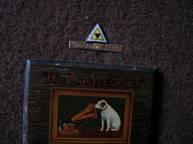 Masters Voice) radiogram to “Doc”. Not only did they give the radiogram to him, but, they recorded a message on a 78 record (not without considerable difficulty in those days). The transcript of that record follows, together with a photo of the Battalion Colour Patch which is attached to the lid of the radio gram. The radiogram is of such intrinsic value that in 2008 it is still in the family (maybe it will end up in the Army Museum in Fremantle, Western Australia).
TRANSCRIPT OF “THANKS DOC” MESSAGE
FROM 2/4 MACHINE GUNNERS FROM PERTH TO P.T. MILLARD (“DOC”)
RECORDED ON 10” 78 RPM DISC WHICH ACCOMPANIED RADIOGRAM CABINET – A GIFT FROM THESE MATES ON THEIR RETURN FROM THEIR POW EXPERIENCES IN THAILAND WWII
Message Says….
“Hello, Doc. Do you remember us….?
Mac Gunners calling you all the way from Western Australia to express our appreciation and thanks for your kindness and consideration during those turgid days of 1943 at Konyu 2.
Words can’t express our thanks, Doc; not only for listening to our grizzles and moans for 24 hours a day, but also for your ability in counting whitebait, weighing gula malacca, and dishing our boong tobacco and 101 other little jobs that you used to do.
We feel, Doc, that in making this small presentation, we are carrying out the wishes of those of our cobbers who sleep forever somewhere in the Siamese jungles.
So, with these few words, old timer, we will ring down, wishing you good health, good luck, and thanks for everything.
The following colleagues will have associated with you at Konyu. Do you remember any of them?
Lou Daley, Dick Ridgewell, Mick Wedge, Noel Mathews, Joe Pearce, Len Armstrong, Clarrie Armstrong, Con Ryan, Trader Horn, Des Colladis, Ted Felton, Harry Nottle, Sid Guyams, Bob Whitfield, Sid Hogden, Sid Curry, Trevor James, Harry Jacobs, Ron Harvey (?) Johnny Gilmore, Norm Thompson, Percy Tomkins, Sam Watt, Sid Dowse, Lou Ashbolt, Ron Corning, Bert Haddon, Jack Whitemore, Percy Sedwich, Ken Tucker, Cole McLellan, Ralph Williams, Ted Bates, Johnny More, Lou Burgess, Bill Breeze, Bill Brie, Claude Dowe, George Burslow, Jimmy Burns, Tom Conway, Arthur Eaves, John Tamnos, Jimmy King, Arthur Walker, Bert Morrissey, Ray Muller, Bert Nottle, Bill Baskin, Jack Smith, Ray Norris, Ron Smith, Harry Blackaster, Reg Pestle, Col McPherson, Jim Bassell, Jack Wrigley, Laurence Dribbley, Clive White, Ray Hatfield, Clive Briggs, Alf Werth, Harry Norris, George Chatfield, Norm Bradshaw, Earle Reeves, Eddie Kemp, Norm Hayes, Bob Reardon, Mick Landin, Bert Mean, Bobbie Marr, Joe Sumner, Bill Radhorn, Gilbert Jack, Sid Webb, Ron Simmons, Clive Kemp, Bazza Fitzgerald, Bob Schutz, Sid Mathews, Clive Robertson, Jimmy Elliott, Stu Smith and Slim Thomas”
Phil and Joan Millard had 4 children – Michael, Elizabeth, John and Peter. Phil died in 2001 and Joan in 2007.
(Capt. K.C.M. MADDEN. Posted missing 10 Feb 1942. Particulars supplied by Major A.P. GARDE, B.M. of 27 Aust. Inf. Bde. “On the retirement of the Br. Forces from the NW Sector of the Island, the 2/26 Bn. took up a position on the E. side of Bt Timah Rd south of Mandai and north of B. Panjang Village. On 10 Feb. Japanese tanks broke through to Bt Panjang and the 2/26 Bn. Area. The 2/26 Bn. then retired south. Capt. Madden moved his RAP, which had been situated in a native hut, to the new area and at dusk 10 Feb. went back with 2 orderlies (QX11215 Sgt. Lang J. and QX13180 Pte. Anderson J.W.) to try and obtain some medical equipment which had been left behind. As they approached the hut, Japanese voices were heard, and Capt. Madden told his orderlies to scatter and he continued towards the hut. Sgt. Lang and Pte. Anderson later heard two shots and after a while went to investigate but were unsuccessful in their attempt to find Capt. Madden.)
Article which was originally written in 2003 by Lt Mick Wedge (Deceased 2007) was re-written by Lt Col Peter Winstanley with the assistance of members of Phil Millard’s family, reference to Jim Elliot and Dick Ridgwell in 2008 and to encouragement and information supplied by ex POW Bill Flowers, President of the ex POWs and Relatives Association of Victoria.
 |
|